
Insights & Opinions
Rethinking Relevance in a New Wave of Digital Banking
Mon, 09 Feb 2026


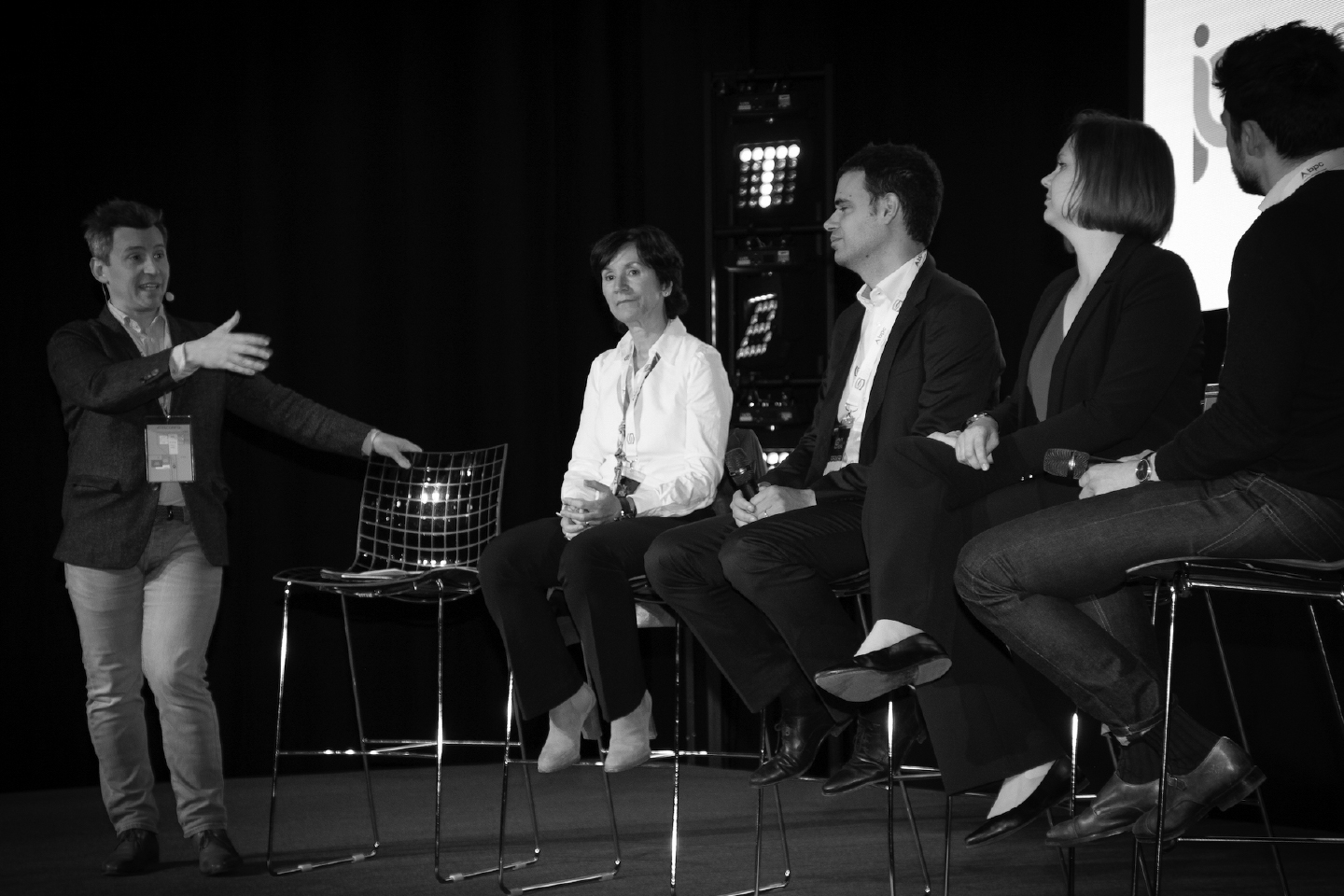
“Relevance” is one of those deceptively simple words that everyone uses, but few define in the same way. At The Banking Scene Conference Luxembourg, the panel “Rethinking Relevance in a New Wave of Digital Banking” treated relevance as something dynamic rather than a fixed brand attribute, and we explored what it takes for banks to remain meaningful in customers’ lives as technology accelerates, fraud evolves, and expectations keep shifting.
Relationship first, digital as the enabler
Claire Lubnau, Head of Commercial and Digital Solutions at Banque Raiffeisen, immediately grounded the discussion in relationships. In her view, “digital banking” easily triggers a reflex to talk about the next feature, the next automated process, or the next AI innovation, but the more fundamental question is how customers want to be spoken to, remembered and kept safe.
She framed relevance through four relationship “pillars”: trust and protection, being remembered, human interaction, and personalisation that feels genuinely helpful rather than like another targeted advert. It’s telling that her first instinct was not “more digital”, but “better relationship”, with digital as an enabler rather than the headline.
That idea of trust as a primary value proposition landed strongly because it intersects with the anxiety many customers now carry into everyday banking.
Claire also touched on a subtle but increasingly important trust question: how customer data is used, and whether customers feel they have meaningful choice. In a world where “personalisation” is often shorthand for “we know things about you”, the line between helpful and intrusive becomes part of the trust equation.
Digital trust doesn’t replace human trust
At the same time, Claire argued that banks can’t abandon the human dimension without losing something essential. She gave a simple analogy: the local barista who remembers your usual order makes you feel valued and recognised, and banks should aim for an equivalent form of “being remembered”. Yet she also emphasised that human interaction remains a differentiator, pointing to the fact that even very large institutions continue to invest in physical presence and in-person expertise.
This matters for a Luxembourg audience because it challenges the assumption that relevance is won purely through a mobile-first experience. Even in an increasingly digital world, customers still attach meaning to being able to speak to someone at the moments that matter.
The industry view: different players, different realities
A natural counterpoint came from Arnaud Clément, Head of Payments and Innovation at ABBL, the Luxembourg Bankers’ Association. From his industry vantage point, he acknowledged that features and the quality of channels do matter to customers, because frequency of use and perceived value are often built through day-to-day services. But he also widened the lens: the question is less about whether fintechs are “allowed” to do different things, and more about how different types of players have different capacities and organisational setups that influence how fast they can move. In other words, the perceived uneven playing field is not just regulation; it’s speed, structure, and the ability to adopt new capabilities quickly.
When “fast” creates sharp edges for customers
On that note, Josef Dvořák, Director of Artificial Intelligence at Finshape, shared a personal story about being a Revolut business customer whose card was blocked at the worst possible times, apparently due to missing information buried somewhere “in the corner” of the app. His point wasn’t to criticise newcomers for the sake of it, but to illustrate a deeper truth about relevance: “moving fast” can create sharp edges that customers experience as humiliation, disruption, or a loss of control. A bank might win on features, but lose on the emotional experience of reliability.
Josef’s broader argument was that established banks have more to lose, so they must think twice; that caution isn’t necessarily weakness, but responsibility. He also offered a candid critique of “innovation theatre”: doing AI because everyone is doing AI, rather than treating it as an investment portfolio tied to genuine customer needs. That observation resonated because it reframes relevance as discipline: choosing the problems that matter, learning from real-world interactions, and building competence over time.
AI as the “individual banker” — and where it goes wrong
Josef moved from general principles into a more provocative idea: AI as a way to provide “a smart, individual banker for each customer”. He argued that the best customer experience in retail banking tends to go to the wealthy, because they receive the attention of private bankers. AI agents, in his view, could help close that gap by providing a form of personalised support at scale, not by replacing people who exist today, but by filling roles that would be ideal in an “ideal world” but are too expensive to deliver one-to-one. It’s a compelling reframe: AI is not simply automation; it’s the potential democratisation of high-touch service.
But we didn’t let the “AI banker” concept drift into hype. I asked Josef about the “creepy versus cool” boundary: what banks should never do even if they technically can. His answer was grounded in experience. He described a project where a bank tried to create “advocacy moments” by surprising customers during life events. For example: a coffee machine delivered to a new homeowner, gifts for a newborn child, or flowers for a long tenure. Some interactions worked, but others were “cringe” because customers wondered how the bank knew and whether the outreach crossed a line.
The lesson was uncomfortable but valuable: what looks good in a meeting room can fail in real life, and AI won’t save bad judgment. You must find the right balance in human decisions first, then teach the AI to operate within it.
Timing matters: the right moment for human intervention
That naturally set up another key theme: the right time for human intervention. Arnaud argued that there are moments where human support is non-negotiable, particularly those linked to emotion or high-stakes decisions. Fraud events, major purchases like a home, and situations requiring genuine empathy are precisely where customers often want to speak to a person rather than “a database”, as he put it. The panel wrestled with whether AI can detect those critical moments reliably, with Josef observing that even humans get it wrong, and that AI will be similarly fallible; the question becomes how you train it and how you manage the inevitable imperfection. Claire added a pragmatic small-bank perspective: even in a relatively small institution, you can’t simply “know everyone”, so you still need data and systems, but you must use them in a way that doesn’t feel like using data without consent, and you must avoid missing opportunities to help.
A Luxembourg-specific lens on open finance and public value
One of the most distinctive, Luxembourg-specific insights came when Claire described a non-obvious open finance use case involving CNS (Luxembourg’s social security institution). Built on PSD2/open banking rails, the initiative allowed patients to pay only the portion not covered by CNS, with the covered amount going directly from CNS to the doctor’s account. There was no new card or device, and it was implemented surprisingly quickly. Claire’s point was not merely that open finance can be a collaboration opportunity, but that it can improve citizens’ lives in ways people may not even realise are possible. Relevance, in that framing, is not only “serving financial needs” but participating in broader solutions that reduce friction in everyday life.
Measuring relevance without turning it into theatre
The panel also confronted a persistent challenge: if relevance is so important, how do you measure it without turning it into another headline KPI that everyone chases?
Josef shared a practical example that surprised even seasoned practitioners: an internal AI-powered knowledge base for frontline teams reduced the “ping pong” of unanswered questions and enabled faster, more consistent responses, which in turn increased NPS by 10 points: an outcome that went beyond efficiency. Claire then explained why a single, global NPS can hide the “quietly unhappy” customer and obscure the reasons behind dissatisfaction. She described Raiffeisen’s exploration to redesign the approach by rethinking segmentation, potentially using AI, then calculating NPS by more meaningful segments that reflect “moments in life” and different customer contexts.
The idea here is important: relevance isn’t one score; it’s context-dependent, and measurement must reflect that.
Collaboration, fraud and the “AI hangover”
In closing, Arnaud had a “bold move” suggestion for Luxembourg banking in the next 12 months: to collaborate more directly on fighting fraud, including sharing information about patterns and tooling, even if there are limitations to what can be shared today. In an era where instant payments can also mean instant fraud, the ability to protect customers becomes a central relevance proposition, not a compliance checkbox.
Finally, Josef offered a warning that felt both sobering and oddly energising: the most overhyped thing about AI is the timeline.
In 2023, some banks publicly promised 30% productivity improvements within two years, and then by 2026, they found themselves discouraged and tempted to abandon the effort. His “hangover” metaphor captured the post-hype moment: AI will change lives, but it’s a marathon, not a sprint, and the industry needs to train for a long run.
What “relevance” really came down to
Taken together, the panel’s core message was that relevance is built through trust, timing, and outcomes that customers can feel.
Digital innovation matters, but only insofar as it strengthens safety, helps banks remember customers in a respectful way, and delivers human support when emotion and risk peak. AI can widen access to high-touch experiences, but only if banks avoid “innovation theatre”, define their boundaries carefully, and accept that meaningful transformation will be slower than the headlines suggest.
In Luxembourg’s tightly networked ecosystem, relevance may increasingly be won not by who ships the most features, but by who collaborates most effectively and who earns digital trust without losing the human relationship that customers still value.
(Join us in Amsterdam on March 24, as we continue to explore the topic of "Rethinking Relevance" across a wide variety of forces redefining the Future of Banking, including Agentic AI, Customer Expectations, Tokenised Assets, Digital Currencies and how we can help our customers navigate complexity and keep pace with change.)
The Banking Scene: Director's Cut
In this episode, Rik and Andrew discuss some of the points that were NOT surfaced during the panel, at one point going (slightly) off topic with a discussion about the dystopian aspects of moltbook (caution advised), and if it might be a glimpse of what the AgenticAI future might be like 😱 In the second half of the episode, Rik catches up with Arnaud to get his reflections on the key points that arose during the discussion and gets his opinion on the tangible value of events like ours for the industry.
You can find us on your favourite podcast platform here or watch the full episode below.