
Insights & Opinions
How Banks Can Derive Value from Agentic AI
Fri, 26 Jun 2026


Agentic AI is currently one of the most discussed topics in banking, but the conversation is moving beyond the excitement of new technology. For banks, the real question is no longer whether agentic AI has potential, it is how to deploy it safely, measure it properly, govern it effectively and turn experimentation into enterprise value.
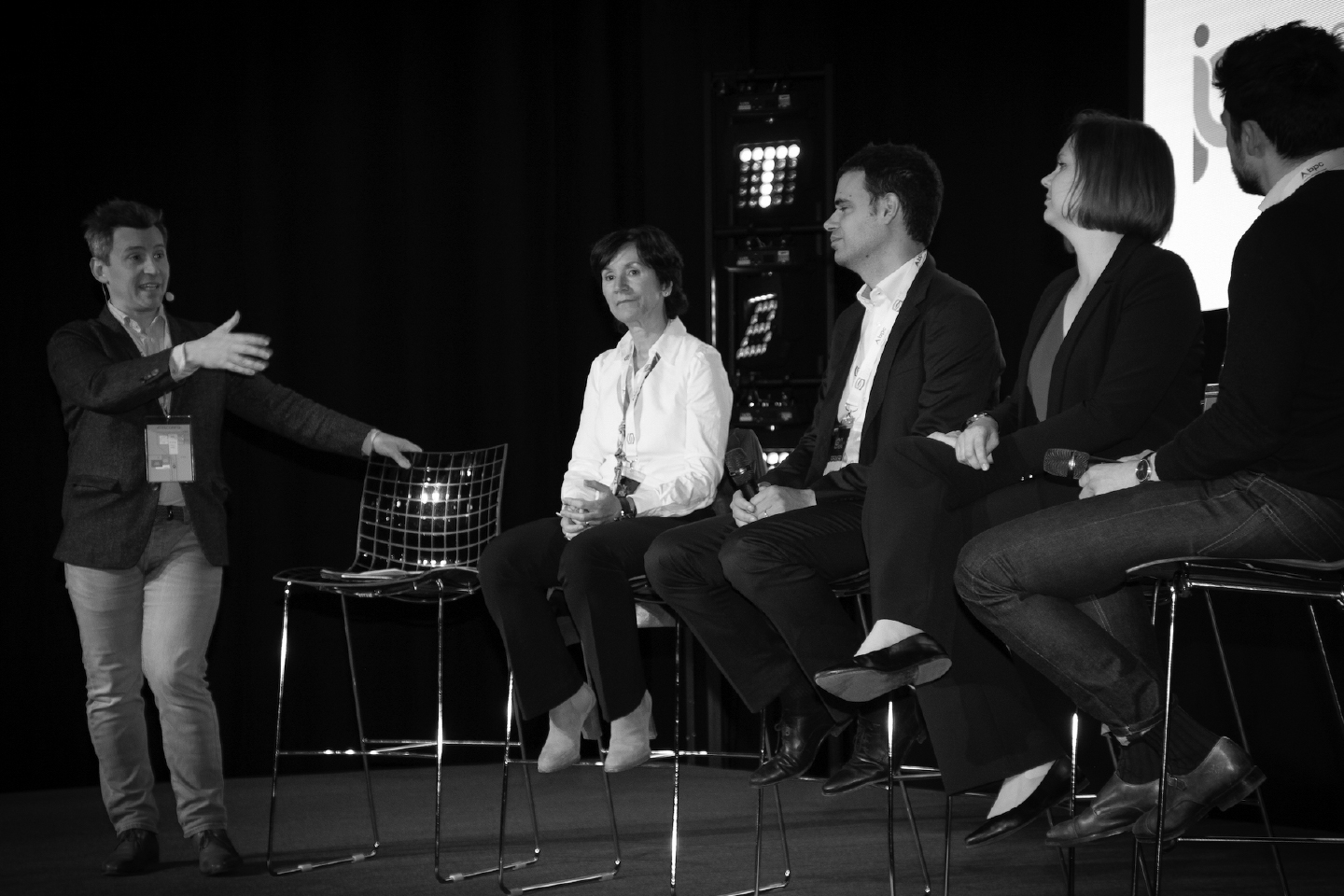
That was the central theme of a recent conversation I had with Alok Chaurasia, Associate Vice President and Anshuman Choudhary, Consulting Leader, GRC Northern Europe at Cognizant, reflecting on a Think Tank session we convened in Brussels in collaboration with Cognizant and Microsoft.
Trust and people remain the defining themes
When asked what stood out most from the Think Tank, Alok immediately pointed to trust, governance, and people. For him, the discussion showed that banks are seriously considering how to move from experimentation to enterprise-level rollout, but that trust and people remain the two decisive factors.
This observation cut through much of the hype surrounding agentic AI. Banks are not simply asking whether the technology works, they are asking whether they can trust it, whether they can explain it, whether they can control it, and whether their people are ready to work differently.
Anshuman highlighted two additional takeaways.
The first was the need for an AI communication framework for customers, comparable in some ways to the cookie consent framework that emerged around GDPR, but likely to be more complex. His point was not just about compliance. It was about comprehension. If customers already struggle to understand today’s cookie banners, how will they understand the permissions, choices and risks involved when AI systems act on their behalf or interact with AI systems operated by their bank?
His second observation was around European large language models. He posed a question about their use during the Think Tank and received what he described as a “fuzzy response”. From his perspective, this suggested that, at least in the European banking context, the value of European LLMs remains unclear. This does not mean they will not become important, but it does suggest that the conversation is still immature, in spite of the recent increase in discussions about sovereignty.
Banks understand GenAI better than agentic AI
One of their insights from the discussion was that banks have become more comfortable with generative AI, but are still developing their understanding of agentic AI.
Anshuman suggested that most banks now understand GenAI reasonably well. They have experimented with chatbots, natural language processing and document-related applications for some time.
The challenge emerges when banks start connecting different use cases into broader processes. At that point, the conversation shifts from an isolated AI tool to a value chain, and that is where understanding often becomes less clear.
This matters because agentic AI is not simply about creating a better chatbot or automating a single task, it is about systems that can support a process across multiple steps, using context, tools and orchestration to help achieve a defined outcome. That requires a different language internally. Banks need to describe not just what a model does, but where it sits in the process, what decisions it supports, what controls apply, and how success will be measured.
Alok explained that Cognizant has approached this through a three-vector AI strategy:
- The first vector is productivity: how AI can help people and teams become more efficient.
- The second is industrialisation: how AI can be scaled and embedded properly.
- The third is the intelligent enterprise: how AI can be used purposefully across business processes to generate measurable value.
For banks, this means the conversation should move away from isolated models and towards engineered intelligence across the enterprise.
The definition matters less than the value chain
The Think Tank revealed that there is no single shared definition of agentic AI. While participants broadly agreed that agentic systems can understand, reason and act autonomously within a controlled context, each organisation tended to describe the concept in its own way.
Alok argued that the absence of one universal definition is not necessarily a problem. What matters more is how banks are moving along the maturity curve and how they measure progress.
Anshuman added an important distinction between a use case and a value chain. A use case might be to generate a credit memo. A value chain outcome might be to make faster, safer mortgage decisions. The difference is significant. If the bank only measures how quickly a credit memo is produced, it may miss the bigger question: “has the customer received a decision faster, and has the bank improved the process safely and profitably”?
This distinction is relevant for senior executives, as boards and executive committees are more likely to approve investment when there is a clear business outcome. Faster lending decisions, better KYC processes, reduced operational friction and improved risk control are the language of enterprise value.
KYC and lending are early areas of momentum
When asked where Cognizant is seeing the strongest momentum for agentic AI, Anshuman pointed to KYC and lending.
KYC is often driven by cost reduction and compliance efficiency. It remains a document-heavy, process-intensive area where banks face pressure to reduce manual work without weakening control. Agentic AI can help by improving document processing, data extraction, workflow routing and exception handling.
Lending has a different driver. Here, the objective is not only cost efficiency, but faster business decision-making. Anshuman linked this to a broader European context, where there is increasing emphasis on banks supporting reindustrialisation and directing capital where it is needed. In that context, the ability to lend faster, while still managing risk properly, becomes a strategic capability.
Mortgage lending and commercial lending were both discussed as areas where agentic AI can play a meaningful role. However, the application differs. Credit memo generation in mortgages may be relatively generic, while wholesale or commercial banking requires much more specialised understanding. That is where specialist agents become valuable, because they can be designed around the nuances of a specific domain.
Smaller banks may need a different path
The Think Tank included representation from a (comparatively speaking) smaller bank, which led to an interesting discussion about how smaller institutions approach agentic AI.
Alok observed that smaller banks appear to be thinking in the same direction as larger banks, but may be one step behind. They are interested in AI across areas such as software development and business processes, but may not want to be first movers. Instead, they may prefer to learn from the experience of larger banks and avoid repeating their mistakes.
Anshuman added that smaller banks face a very real constraint: the cost of experimentation.
Large banks have more capacity to absorb failed experiments, higher token costs and longer learning cycles. Smaller banks may not. A wrong decision on agentic architecture or model usage could have a disproportionate financial impact.
This does not mean smaller banks should stand still. It means they need to be strategic. For vendors and system integrators, there may be a role in transferring lessons from larger institutions to smaller banks in a safer, more controlled way.
Human-in-the-loop must be more than approval at the end
Human oversight was one of the strongest themes that emerged during the Think Tank session. There was broad agreement that banks are not yet ready to allow AI agents to run major business processes end to end without human involvement, especially where customers, reputational risk or regulated decisions are involved.
Alok explained human-in-the-loop through both technology and business examples.
In software development, AI can generate code, but humans must ensure that it follows the bank’s security guidelines, coding standards and risk framework. That human feedback can then be fed back into the system, improving future outputs.
In business processes, the human role is even more sensitive. Where there is client impact, banks are cautious. Internal use cases, such as support for private bankers, are more likely to move into production first because they allow banks to gain efficiency while retaining control.
The key point is that human-in-the-loop should not mean placing a person at the end of a workflow to rubber-stamp decisions. That would create a new form of human automation, where employees are overwhelmed by AI-generated recommendations and lose the ability to exercise judgement. Instead, human oversight needs to help train, guide and contextualise the system, bringing institutional knowledge, risk appetite and lived banking experience into the design.
Banks need to experiment, but with thick guardrails
Anshuman warned that AI is putting advanced modelling techniques at banks’ fingertips at unprecedented speed. Financial institutions have used machine learning and modelling for many years, especially in areas such as credit decisioning and fraud. What is different now is the speed and accessibility of new models.
That creates opportunity, but also risk. Banks should not block experimentation, but they need what Anshuman described as a “thick” human-in-the-loop approach. Humans need to understand not only where models perform well, but where they fail.
He also cautioned against marketing language that obscures what is really happening. He gave the example of vendors describing reinforcement learning-style processes as “dreaming”, a phrase he considered potentially misleading and which for me personally, is too close to the widely used term “hallucination”. For banks, the challenge is to separate reality from marketing and to create safe conditions for experimentation.
This is important as banks navigate the EU AI Act, internal model governance and supervisory expectations. Compliance is necessary, but it should not become the only lens. If the governance conversation becomes purely defensive, banks may fail to create value. The better approach is to allow experimentation within clear, well-understood guardrails.
Agent swarms, specialist agents and orchestration
We also touched on the architecture of agentic AI, and I asked if banks should use a single powerful agent or a network of specialised agents.
Anshuman argued for a mix.
In P&L-sensitive business processes, many banks have fragmented orchestration frameworks, legacy BPM systems and complex integration issues. In those contexts, Cognizant recommends combining agentic orchestration with deterministic orchestration. The agentic layer can help coordinate work across humans, systems and agents, while deterministic orchestration provides the predictability required in regulated processes.
At the same time, there is a strong case for specialist agents. A generic document collation agent may be suitable in some mortgage processes, but commercial banking requires agents that understand the complexity of large loans, client context and sector-specific nuance.
This suggests that the future architecture of banking will not be purely agentic or purely deterministic. It will be hybrid. The best systems will combine flexibility with control, and intelligence with predictability.
Agents may need to be managed like employees
One of the more memorable ideas from both the Think Tank and the interview was that AI agents may need to be managed almost like employees.
Alok compared raising AI agents to raising a child. They need to be guided, corrected and developed over time. Banks will need to decide how much tolerance they have for mistakes, how feedback is incorporated, and when an agent should be replaced or switched off.
This analogy is useful because it makes clear that agents are not just software tools. Once they are embedded in business processes, they become active participants in work. That raises practical questions. How should their performance be measured? Who is responsible when they make a poor decision? What happens if an agent follows its instructions correctly, but the result is commercially harmful? When should a bank retrain, restrict or retire an agent?
These questions are still early, but they will become increasingly important as banks move from pilots into production.
Competitive advantage will depend on how banks overcome legacy constraints
When asked where agentic AI could create genuine competitive advantage, Anshuman argued that one of its biggest opportunities is to help banks work around legacy constraints.
Banks often begin new initiatives with a sunk cost problem. They have significant investment in existing systems and can only modernise at a certain pace. Agentic AI may change that dynamic. It can allow banks to build new capabilities around existing systems without requiring full legacy replacement from day one.
That does not mean every bank will gain the same advantage. Mortgages, lending and payments may become common areas of deployment, but each bank will apply agentic AI differently depending on its backlog, market position, technology estate and strategic ambition. A smaller bank trying to become a leader may use agentic AI differently from a large incumbent trying to defend its position.
This is where competitive advantage may emerge. Not from using agentic AI in a generic way, but from applying it to the specific constraints, strengths and ambitions of the institution.
CEOs need common language, evaluation frameworks and experimentation
The interview closed with me asking for advice for bank CEOs looking to move from experimentation to enterprise value over the next 12 months.
Anshuman’s first recommendation was to create a common language for agentic AI. Banks need to be able to compare different approaches, whether they are fixing specific problems, automating use cases or redesigning value streams. Without shared language, teams will struggle to evaluate outcomes consistently.
His second recommendation was to build a strong project evaluation framework. This should not be driven only by compliance, even though regulation matters. It should assess whether agentic AI creates stable, sustainable business value.
His third recommendation was to encourage experimentation, but with smarter guardrails. Banks can either limit experimentation to a narrow set of approved models and tools, or they can define the boundaries clearly and allow teams to explore within them. In his view, organisations that experiment more will learn faster and create more value.
Alok reinforced the importance of agreeing the value realisation framework upfront. Too often, projects begin with a business case, but the measures of success are not clearly agreed or sustained over time. Banks need clarity on what will be measured, how long it will be measured for, and how the value of the initiative will evolve.
He also emphasised change management. Agentic AI is not only a shift in technology. It is a shift in thinking and working. If banks underestimate the human and organisational change required, they may struggle to move beyond experimentation.
The real challenge is no longer the technology alone
The conversation with Alok and Anshuman made clear that agentic AI is entering a more serious phase in banking. The questions are becoming more practical, more strategic and more demanding.
- Banks need trust, but they also need value.
- They need governance, but they also need experimentation.
- They need human oversight, but they must avoid creating new forms of manual bottleneck.
- They need architecture that is flexible, but also resilient and explainable.
The organisations that succeed will not be those that deploy the most agents or use the most fashionable terminology. They will be the ones that connect agentic AI to real value chains, define clear controls, measure outcomes properly and bring their people with them.
This interview is included as a reference source for our white paper: "AI and The Agentic Future of Banking", published in association with Cognizant and featuring exclusive interviews with senior banking executives, technology leaders and AI experts, together with insights gathered through The Banking Scene's research, think tanks, industry events and third-party papers, which you can download on the link below.

The Banking Scene: Director's Cut
You can find the full interview below or follow along on your favourite podcast channel here (don't forget to subscribe!).