
Insights & Opinions
From Complexity to Clarity: Why Banking Needs Better Conversations, Not Just Better Technology
Tue, 07 Apr 2026


We spend most of our time in banking talking about what technology can do.
I get it: we love to talk about technology developments and opportunities. And yes, also about their pitfalls and risks. We do that too, most of the time. But honestly, the conversations I like the most are, from a conference point of view, the less commercially interesting ones.
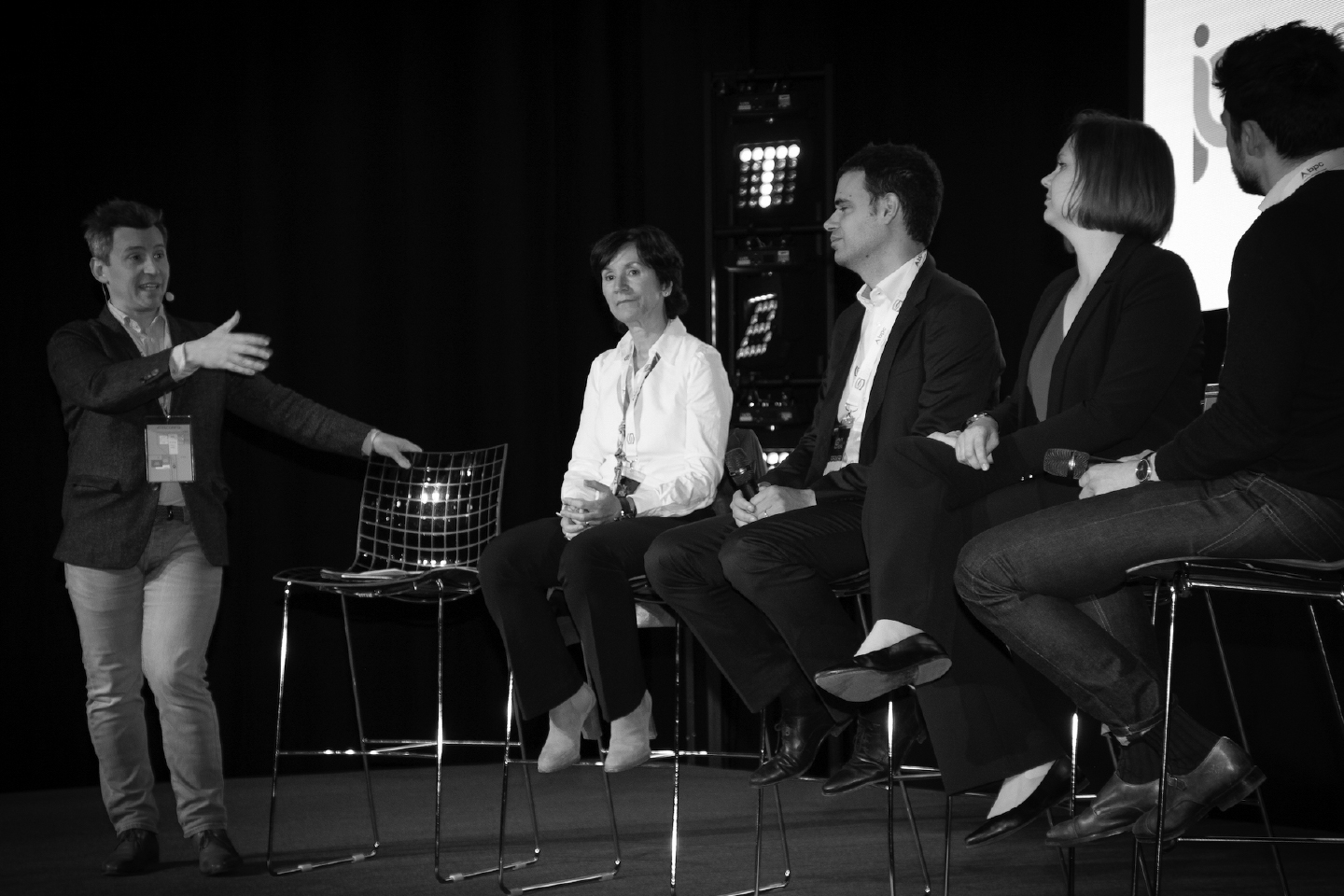
Take, for example, the final session at The Banking Scene Conference 2026 Amsterdam: “From Complexity to Clarity: How Banks Help Customers Keep Pace with Change”. That was refreshing, refreshing because for an entire day we were talking about AI, Agentic AI, Fraud, Identity, Tokenised Assets and Digital Currencies. We tried to get a grip on a growing level of complexity.
But what about the customer? What about the end-user? The conversation we had was absolutely necessary, but insufficient. What often remains underexposed is the more difficult question: how do these innovations translate into something meaningful, usable, and trusted by customers?
The panel on “From Complexity to Clarity” stood out precisely because it shifted the lens. It did not ask what technology can do, but what it means and how you translate that meaning into something meaningful for customers, for trust, and ultimately for the role of banks in an increasingly complex financial ecosystem.
I was honoured to be joined by Ellen Van Acker, Chief Operating Officer for Client and Digital Services of ING Wholesale Banking, Laura Robertson, Head of Partnerships at Wise Platform and Erin Taylor, Partner at Finthropology.
When Innovation Scales Faster Than Understanding: Navigating Complexity, Context, and Diverging Customer Realities
A key undercurrent in the discussion is the growing gap between what the industry can produce and what customers can or are willing to handle. Throughout the day, the theme of complexity persisted, not only technical but also systemic.
“It’s not actually a simple question… it depends very much on who you’re talking about, what the context is”, explained Erin, and that makes the problem even more complicated. We cannot talk about the customer anymore. Some have a harder time dealing with new technologies than others, some take more benefit from it than others. Some will demonstrate more, or less, resistance against change than others.
This underscores that complexity is dependent on context; what appears intuitive in one situation can be overwhelming in another. Laura Robertson’s contribution brings this into sharp operational focus. In cross-border payments, arguably one of the most complex areas in banking, customers are not confused by the concept of sending money abroad. They are confused by the opacity of pricing. Hidden FX margins, unclear fees, and jargon create anxiety.
Her response is telling: simplify the output, not the underlying system. Present one clear price, with transparency built in. The complexity still exists, at the back, and it is translated and restructured in a way that customers can understand.
This is an important distinction: Clarity is not about removing complexity. It is about building complexity in such an intuitive way that doesn’t feel complex.
What elevated the conversation was the introduction of a global, anthropological perspective, something still too rare in banking discussions. It was a refreshing perspective on the problem statement.
Erin’s research across Brazil, Laos, Cambodia and Europe reveals that financial behaviour is deeply contextual. In Brazil, for instance, high awareness of fraud has not led to convergence, but divergence. Some consumers prefer cash, others debit cards, others credit cards, and others instant payment systems like Pix; each based on their own perception of risk. There is no single “rational” customer.
Even more striking is her observation from Laos, where individuals have transitioned from barter economies to digital payments within a single generation. Digital literacy is not evolving gradually; it is accelerating rapidly: “Everybody below 50 is digitally literate.”
European banking has long operated under the assumption that markets will converge: towards digital, towards instant payments, towards a small set of dominant behaviours. PSD2, SEPA, instant payments: each of these initiatives is, in essence, built on standardisation.
Erin’s observations suggest the opposite. Even in highly digital environments, behaviour fragments rather than converges. Risk perception, cultural habits, and trust dynamics create parallel realities.
For European banks, this means that a single “best” payment method may not emerge, that customer journeys will not standardise, even within a single market, and that product strategies built on uniform adoption curves risk underperformance.
The implication is clear: relevance will come from managing diversity, not eliminating it. AI offers a tremendous potential here to help banks pivot to hyper-personalised services without losing control over their systems through fragmentation.
A shift in power: from institution-led to customer-driven decision-making
Another key theme emerging from the discussion is the gradual but profound shift in decision-making power. Truth be told, I’m still not 100% sure whether that is a reality or a corporate vision, but the message was clear: customers are no longer passive recipients of financial services, especially in a business context. They are increasingly equipped, either directly or through tools, to validate, optimise, and even automate decisions.
This shift challenges one of the banking industry’s core assumptions: that the bank owns the customer journey. Ellen Van Acker’s perspective from ING illustrates how deeply embedded that assumption still is. Large institutions are structured to manage end-to-end journeys across multiple personas (CFOs, treasurers, and operational team), each with different needs and expectations.
But her description of how ING operates also reveals the complexity behind the scenes: “Clients don’t see the complexity. We absorb it internally… and bring back a clear answer.”
This is the traditional strength of banks: acting as the orchestrator that shields customers from complexity on their platforms. However, the emerging reality is different. If customers, or their agents, start orchestrating journeys themselves, banks are no longer the centre of gravity. They become one of many selectable options.
This is where the contrast with Wise becomes particularly relevant. Wise is not built around owning the journey, especially Wise Platform, which positions itself through integration with bank platforms of partner banks.
The implication is subtle but profound: The industry is shifting from controlling the journey to competing within it.
The paradox of clarity: reducing complexity without removing control
One of the more nuanced discussions during the panel was around the concept of clarity itself. For years, clarity has been equated with simplification. But simplification can come at a cost: reducing choice, hiding risk, or oversimplifying decisions.
Erin challenges this assumption by reframing complexity as something that can have value. Complexity often reflects choice. The real issue is not its presence, but the customer’s ability to navigate it.
This is where AI introduces both opportunity and tension: AI can act as a guide, summarising information, structuring options, and helping customers make sense of complexity. It allows customers to engage earlier in the decision-making process, rather than being overwhelmed at the end.
But there is a limit, as she pointed out, AI can explain what people do, but not why they do it. Human context remains essential.
Ellen’s approach at ING reflects this balance. AI is introduced internally first, where value can be demonstrated in a controlled environment: reducing time spent searching for information, improving efficiency. Those proof points are key, she believes, before being exposed externally.
On that same note, regarding the desire to kill or add complexity, the discussion turned to one of the industry’s most persistent narratives: the elimination of friction. Friction is not inherently negative. In some cases, it is essential. An example shared during the discussion illustrates this well: customers preferred a longer loan process because it felt more trustworthy.
This aligns with both behavioural insights and operational practice. From Wise’s perspective, adding “friction” in the form of fraud warnings is not a drawback, but a safeguard, an explicit moment where customers are asked to reflect before acting.
From ING’s perspective, certain processes, such as manual payment approvals, are intentionally not frictionless. The stakes are too high.
This leads to a more mature understanding: The goal is not to remove friction, but to design it intelligently.
Conclusion: why these conversations matter
I hope you understand the importance of these conversations now.
First, it reconnects innovation with its ultimate purpose: customer adoption. As highlighted in the session introduction, success depends not on what is built, but on whether customers can use and trust it.
Second, it brings together perspectives that rarely meet, technology, infrastructure, behaviour, and operations. It is precisely at the intersection of these perspectives that the real challenges, and opportunities, emerge.
Third, it surfaces the systemic nature of the problem. Complexity is not located in one place. It is embedded across the ecosystem.
And finally, it challenges the industry to rethink its role. We are not simply moving towards more advanced technology. No, we are moving towards a different model of interaction, one shaped by distributed decision-making, contextual trust, and increasingly intelligent systems.
But perhaps the most important takeaway comes from combining the three perspectives on stage.
- Erin Taylor reminds us that behaviour is complex, contextual, and often unpredictable.
- Laura Robertson shows that clarity can be engineered through transparency and design.
- Ellen Van Acker demonstrates that delivering that clarity at scale requires deep organisational transformation and active listening to users and customers
Together, they point to a simple but demanding truth: The future of banking will not be defined by how advanced our systems are, but by how well we translate their complexity into something customers can trust.
The Banking Scene: Director's Cut
Andrew was happy that Rik wrote the above blog, as he had missed out on most of the session (because someone has to make sure things run smoothly at our events 😇) and as is customary, their conversation about the session reveals more (sometimes unexpected) insights. You can watch / listen below or follow along on your favourite podcast platform here - and make sure to SUBSCRIBE for future updates!