
Insights & Opinions

AI in Finance: Who Stands Behind the Numbers?
Mon, 23 Nov 2026
“If you cannot defend the number, you are not ready to delegate it.”
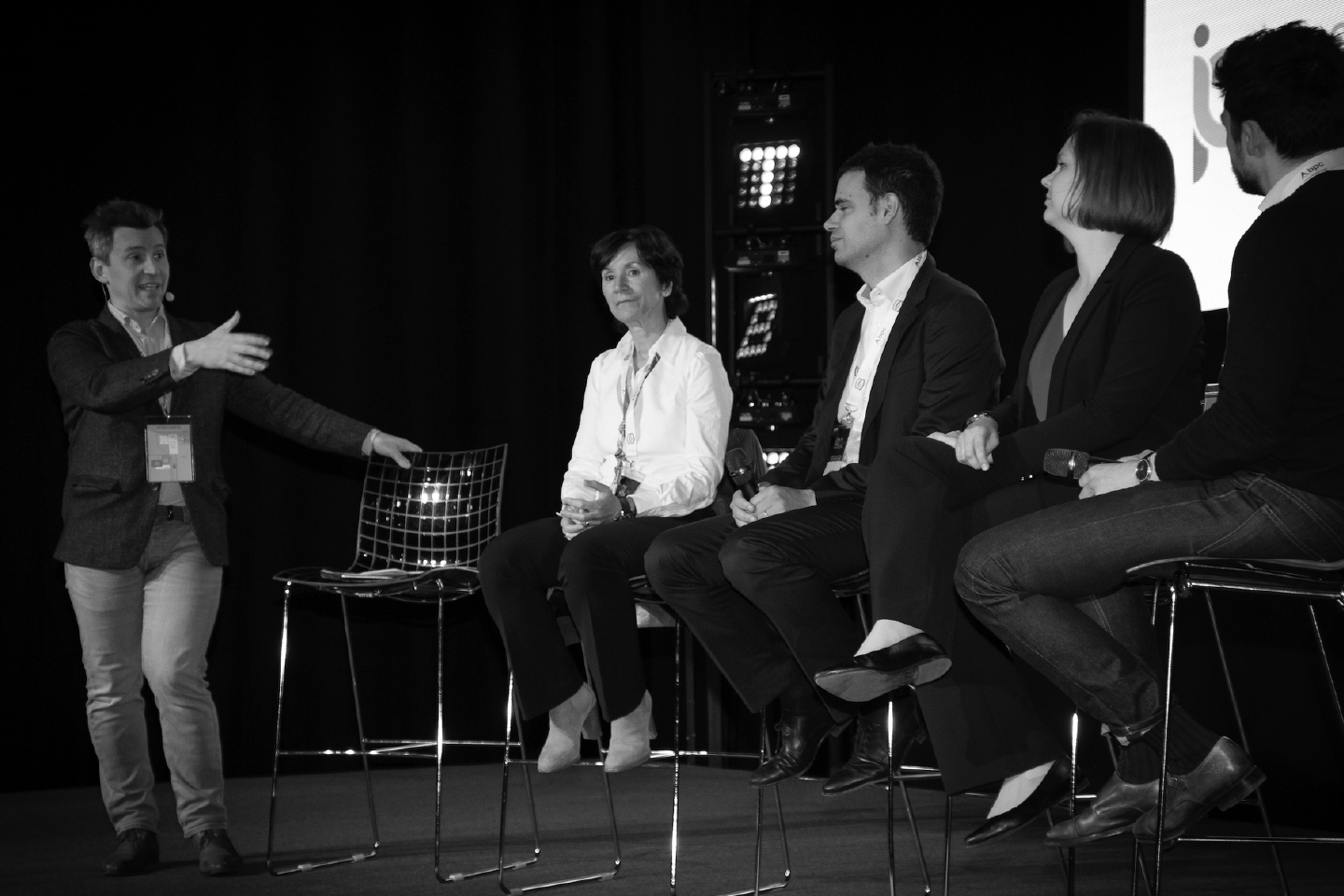
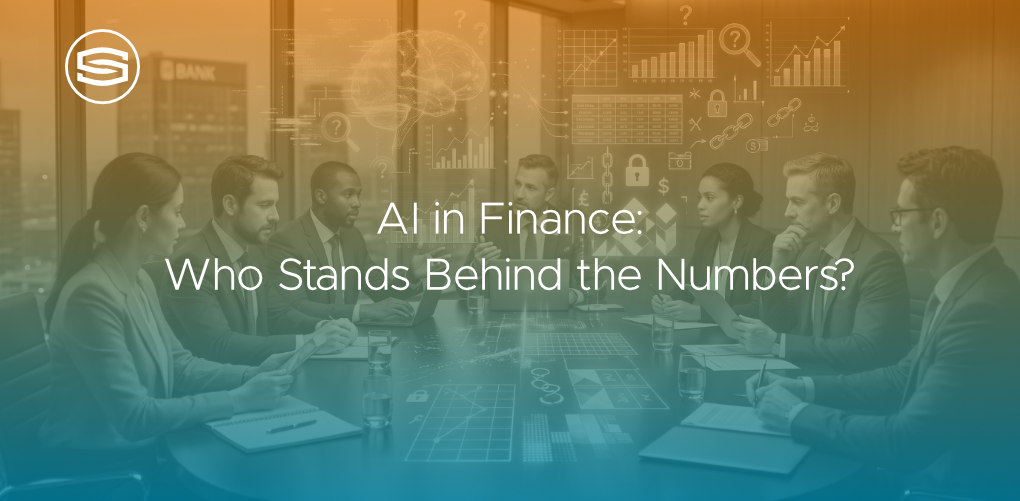
I really enjoyed our latest Think Tank Session (executive roundtable) we organised with Workiva; it was different from all the other Think Tank Sessions and panels we usually have on AI. So far, most conversations have been with people who excel at using AI and can proudly share their successes and lessons learned.
This audience was different; we gathered a group of finance leaders, people who cannot afford to experiment, but are equally expected to turn an ROI on AI initiatives, if not today, probably tomorrow, to discuss “AI-Ready Finance: Can You Trust the Numbers Behind the Output?”.
When one of the representatives from Workiva asked the participants to rate their confidence in AI applied to the finance function, the score was not only relatively low, but a dinner of exchanging thoughts on the topic didn’t really move the needle, as a second round of scoring at the end of the evening showed.
There was plenty of interest in what AI could do, but for the people responsible for standing behind financial information, seeing the potential and trusting the output remain two different things.
What exactly are we being asked to trust?
The variety of confidence levels may be partially explained by the different definitions people in the room put on AI. Some participants meant analytical models long used for risk assessment; others, generative AI drafting reports; and others, agents acting across finance processes. Confidence in one does not guarantee confidence in another.
The task matters just as much. Preparing a narrative for review carries different consequences from applying a reporting treatment or authorising an action.
Prompting became central to this discussion. Some participants argued that precise instructions, specifying sources, definitions, boundaries and checks, could make agents highly dependable. Others questioned how much assurance those instructions provide and how to validate their effectiveness.
I kept returning to the distinction between a rule and an instruction. Conventional automation executes specified logic. AI interprets what we ask it to do. How much certainty can finance attach to that interpretation?
We did not resolve that disagreement, but it exposed a practical starting point: separate calculating, drafting, checking and approving before deciding where AI belongs. Trust needs to be assessed at the level of individual procedures, with clarity about what the system may do and who validates the result.
The problem behind the number
But it’s not just defining AI that makes trusting AI tools easy. Especially in the world of finance and reporting, people use the same word to mean different things. For example, sales may define revenue as signed contracts, finance as recognised revenue (with or without VAT? With or without intracompany?) and treasury as cash received. Group reporting adds consolidation adjustments, and each view can be legitimate.
People navigate these differences by knowing who prepared a report, which definition a colleague uses and where to find reconciliations; knowledge often absent from systems. AI applications need these distinctions made explicit.
One participant’s written takeaway was that AI should manage complexity, not force uniform definitions. I liked that nuance, because the goal should be to clarify which view applies, who approves it, and how it connects to others, not to construct a one-size-fits-all. That is not how finance, an organisation, or the world works.
This raises questions technology that remains intrinsically human: Who owns the data and its definition? Who resolves departmental disagreements?
AI may ease information exchange and reconciliation, but the organisation must still decide what the information means, and have clear owners and governance over those definitions.
Boundaries need owners
Ringfencing was a recurring answer to questions of trust. Participants described a controlled environment with approved information, a defined task and limits on what an application can access or do. The appeal is easy to understand. A finance application should use relevant sources and definitions, not silently import unrelated interpretations.
But participants disagreed on whether boundaries provide enough assurance. Restricting sources does not ensure information is complete, current or consistently defined; someone must approve the boundaries and validate them. That requires common sense and a deep understanding of the job and the business. And today, technology can’t replace that (yet?).
One participant’s take-home reflection put accountability bluntly: “AI will not go to jail.” Those approving a report remain responsible and must understand the process well enough to explain challenged results.
Data lineage is essential: Where did the number come from? What adjustments were made? How was it checked? Can others follow the evidence? These questions already matter in finance; AI makes clear answers even more important.
Finding Problems While There Is Time to Act
A guest shared that after an unexpected default, AI helped review a credit file and uncover information missed earlier. A written takeaway captured the opportunity: “AI is not only there to generate but also to double-check & make quality assessments.”
Could AI help finance spot problems earlier? When I proposed more timely reporting, the ambition was challenged: Is closing in one or two days really the objective?
Banking relies on assumptions, estimates and data flowing across systems, so speed alone isn’t useful. If a reconciliation goes wrong mid-month, why wait until closing to find out? AI could flag contradictions and discrepancies, guiding experienced reviewers to investigate sooner. This makes continuous confidence tangible: more frequent checks and fewer month-end surprises.
Economics matter too. An answer delivered in seconds has little value if validation takes longer than the time saved. The real measure is how efficiently finance reaches a result it can approve and defend.
From Reporting Results to Shaping Decisions
If AI reduces the effort of assembling and reconciling information, what should finance do with the time gained?
The discussion pointed towards a stronger role as a business partner: explaining why margins are falling, testing whether a product remains profitable across an economic cycle, or showing how changing assumptions affect capital.
A report showing weaker profitability becomes the starting point for examining pricing, costs and customer relationships, and deciding what to do next.
There was an accompanying warning: AI can produce more material than people can meaningfully review. Longer reports do not necessarily improve decisions. The opportunity is to give the business clearer advice on what the numbers mean and where to act.
Conclusion: What Would Move the Needle?
Looking back, I understand why the confidence scores barely changed. Recognising AI’s potential does not answer the questions finance leaders face when approving its output.
The discussion also exposed a need for greater AI literacy: a shared understanding of what different applications can do, where their limitations lie and how to challenge their results. Practical experience can build that understanding, provided organisations turn individual experimentation into shared learning and stronger governance.
Some participants saw adoption progressing faster in commercial activities than in financial reporting. Finance has long used analytical models, but generative and agentic applications still have to earn confidence in processes where the consequences of error are significant.
As experience and organisational maturity grow, earlier warnings, less reconciliation work and more time to advise the business could provide compelling reasons to move forward.
The responsibility behind the numbers remains. Delegating the work only makes sense if finance can still defend the result.
The Banking Scene: Director's Cut
As Andrew was unable to join the session, he was keen to catch up with Rik to explore the insights shared around the table. You can view their discussion below or listen on your favourite podcast channel here.