
Insights & Opinions
Where Tomorrow Meets: What Quantum, AI and Tokenisation Mean for Benelux Banks
Mon, 27 Jul 2026


At The Banking Scene Conference in May, the closing panel of the day in the Banking track tackled a question that has become unavoidable for every bank across the Benelux region: what happens when quantum computing, artificial intelligence, tokenisation and blockchain converge, and how should banking leaders prepare for it?
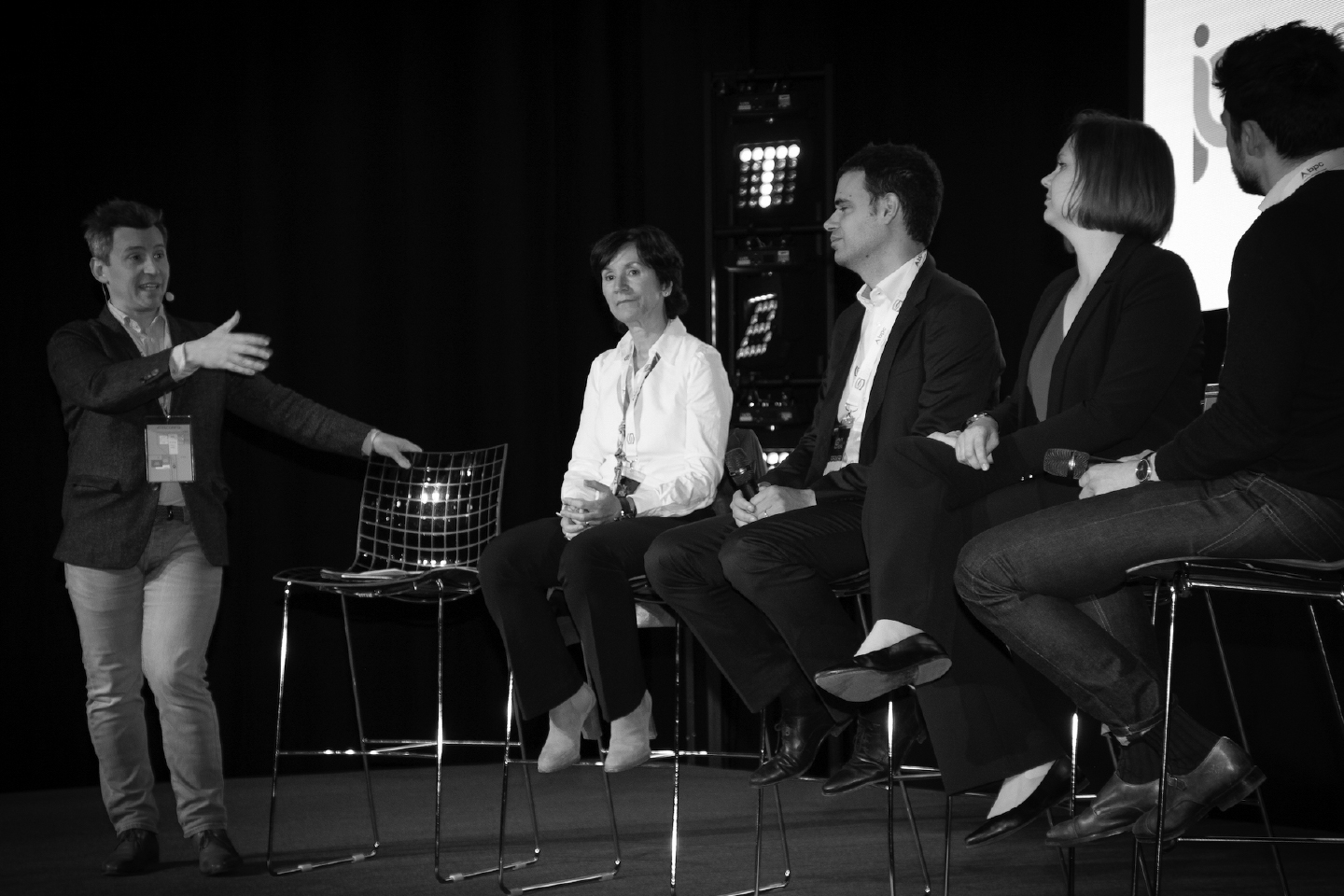
The session, titled "Where Tomorrow Meets: The Convergence of Finance's Next Technologies", was moderated by Samantha Emery, Financial Services Executive and iNED, who was joined by Dirk Hermans, Innovation Manager for Digital Asset Strategy at KBC Bank, and Kevin Johnson, Head of Innovation at Euroclear. Sadly, Theodora Lau, Founder of Unconventional Ventures, was unable to join the session due to an injury, but Samantha brought her there “in spirit” by referencing conversations and comments made during a preparation call.
What followed was a refreshingly candid conversation, deliberately free of hype, that offered a useful sense check for anyone trying to navigate this next wave of financial innovation.
Has the Industry Moved Beyond the Hype?
The panel opened with a deceptively simple question: has banking got past the initial excitement of new technology and properly connected it to customer and business value, or is there still more work to do? Kevin's answer set the tone for the session. He argued the picture is mixed. Artificial intelligence is generating huge momentum, quantum still feels distant to most institutions, and tokenisation experiments are only now starting to circle back to a genuine "why". Too much innovation, he suggested, remains technology for technology's sake rather than a response to a real client need.
Dirk added an important nuance around timing. Innovation, in his view, is about projecting years ahead and holding a picture of an eventual end state, even if that state is not close. Some technologies deliver benefits immediately; others struggle because the surrounding infrastructure simply is not ready yet.
Much of what banks currently implement under the banner of innovation is really about efficiency rather than transformation, but the two are not unrelated: working with new technology today builds the organisational learning that transformation will eventually require.
Tokenisation, Stablecoins and the Search for a Genuine Customer Problem
Much of the discussion returned to a single test: does a given technology solve a problem customers actually have today? Dirk pointed to instant, round-the-clock cross-border payment settlement as a concrete example where tokenised money and stablecoins can fill a genuine gap that traditional infrastructure has struggled with. Yet he was equally clear that new capability brings new risk: tokenisation shifts data onto open, transparent networks, which introduces fresh questions around trust: who stands behind a tokenised wallet, and how much accuracy is acceptable when an AI agent is initiating payments on a customer's behalf?
Kevin was more sceptical of blockchain as a category, describing much of the past decade as a solution in search of a problem. He argued that most customers do not care what infrastructure sits behind their bank account, only that it works reliably, in the same way most people do not care how clean water reaches their tap.
For him, the real test for any converging technology is whether it solves something that cannot be done today, or whether it merely repackages existing capability with a more fashionable label.
Quantum Computing: A Cybersecurity Deadline, Not Just a Future Promise
A live poll, rerun from the previous year's event, showed a marked shift in sentiment. Confidence that quantum computing will meaningfully transform banking by 2035 has risen noticeably, with around 70 percent of the audience now scoring above six out of ten. Kevin used this moment to make one of the panel's sharpest points: the pressing quantum issue for banks is not future capability; it is cybersecurity. Current RSA encryption standards, which underpin virtually every financial transaction, are already considered outdated by 2035 regardless of whether a viable quantum computer exists by then.
Banks, he argued, need to be reassessing their cryptography now, moving to quantum-safe algorithms as a matter of urgency rather than waiting for quantum hardware to arrive.
Trust, Identity and the Missing Piece of Web3
Dirk introduced what he called "proof of economical existence", a concept closely tied to digital identity. As AI agents and quantum-powered systems increasingly act on data on a customer's behalf, the fundamental question becomes whether that data can be trusted: is it authentic, cryptographically signed, and linked reliably to a verified identity? Without this, he warned, hyper personalisation and autonomous financial agents risk building on unstable foundations. Kevin reinforced the point, recalling comments from Tim Berners-Lee that identity should have been designed into the internet from the outset, rather than effectively outsourced to a handful of large technology providers through login buttons.
Both panellists agreed that identity remains one of the biggest unresolved pieces of the Web3 puzzle, and that banks have a natural role to play here given their existing expertise in risk management and trust infrastructure.
Regulation as a Stabiliser, Not Just a Guardrail
The conversation also explored the tension between decentralisation and control. Dirk was candid that being "your own bank" sounds appealing in principle but requires financial literacy and risk management capability that most people simply do not have. He compared regulatory circuit breakers, which pause trading when markets fall sharply, to a form of collective reassurance: a mechanism that stops panic rather than accelerates it. Remove those trust anchors entirely, he argued, and markets default to favouring whoever is strongest, which is unlikely to produce a fair or stable outcome. The challenge for the sector is finding the right balance between competitive innovation and shared regulatory guardrails that protect financial stability and consumer trust alike.
The Human Cost of Getting This Wrong
Perhaps the most striking part of the session addressed the societal risk of leaving people behind. Kevin spoke candidly about accessibility, noting that technologies often start out inclusive before business models built around free or low-cost access become unsustainable, risking a two- or three-tier society. He also addressed workforce concerns directly, warning that if artificial intelligence is used to eliminate junior roles rather than augment them, banks risk hollowing out their own talent pipeline for the future.
His advice was to treat AI as an augmentation of human capability rather than a replacement for it, freeing people to focus on judgement, storytelling and the human elements of financial services that technology cannot replicate.
Key Takeaways for Banking Leaders in the Benelux
Samatha closed the session by framing the challenge facing banking leaders: this is not a single strategic choice but a requirement to progress on multiple fronts simultaneously. New technology sets a higher floor for efficiency and customer satisfaction, but the ceiling above that floor is shaped by ambition, responsible stewardship and collaboration.
For banks across the Benelux region, weighing tokenisation, quantum readiness, AI adoption and identity infrastructure all at once, the panel's message was clear. Progress deliberately, keep the customer problem at the centre of every decision, and never lose sight of the human judgment that keeps the whole system trustworthy.
Download our latest white paper, "AI and The Agentic Future of Banking", for further insights from industry experts on how AI is shaping the future of banking.