
Insights & Opinions
From Wild West to Wired World: The Civilising of Blockchain
Mon, 20 Oct 2025


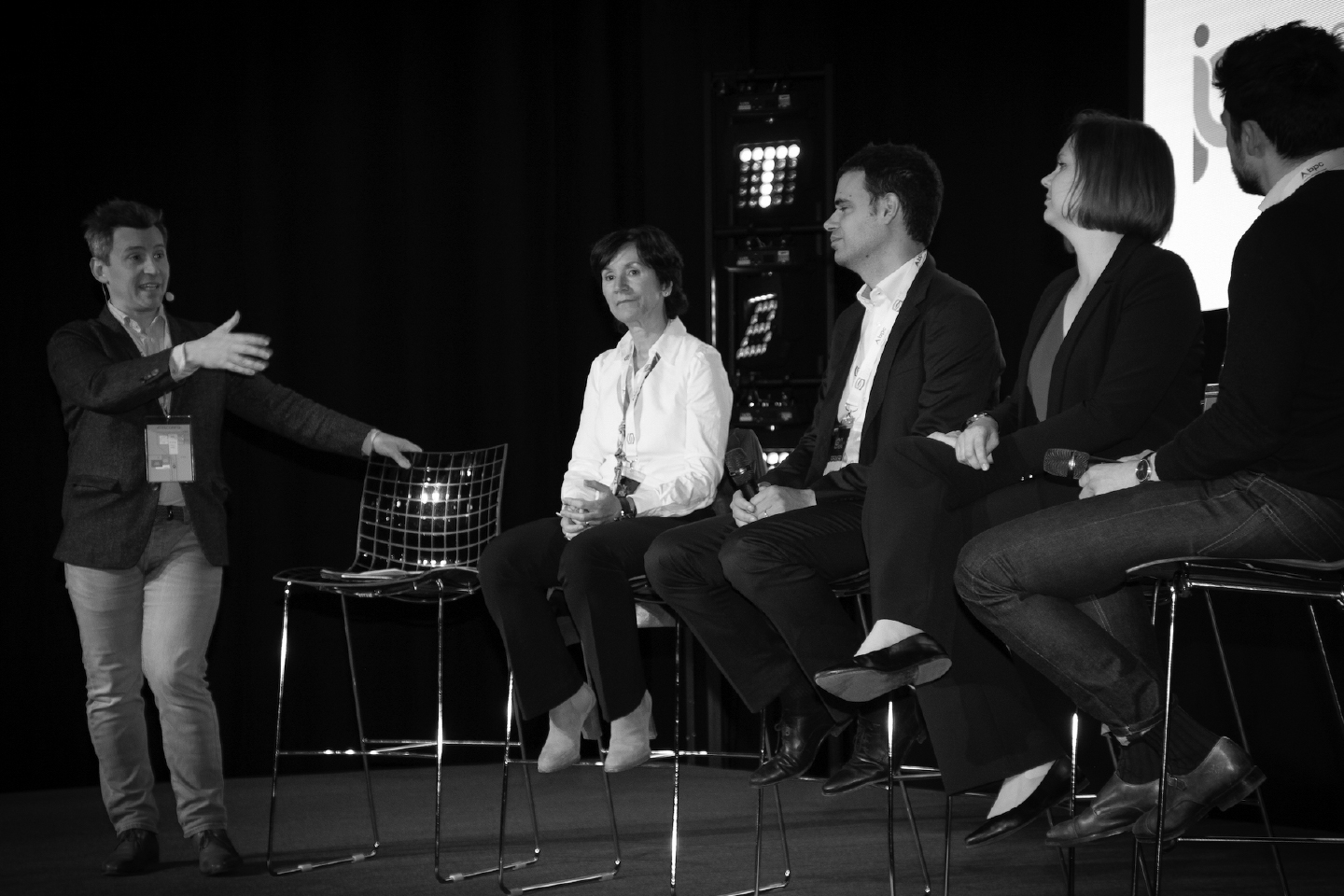
Let me start by sharing that I admit this is a story, not the usual blog format, and I co-authored it with my virtual friend. The story is based on a session I had the honour to host at #Sibos, a session with Co-Pierre Georg, Director at the Frankfurt School Blockchain Centre, and Rita Martins, Head of Products Ecosystem, Digital Assets at London Stock Exchange Group. Rita unfortunately couldn’t make it, but Innes Macleod, Mr. Innotribe, and I made sure she was there in spirit, by making her story my own and handing everyone in the audience a copy of her book.
The session was themed “Crypto and Web3.0: Wild West or Settled Environment?”
This blog is not exactly telling the story of what was discussed, but it is highly based on it.
In The Beginning
There was a time when the digital world was a wilderness, and in some ways, that time is still today.
A place without laws, without borders, and, most of all, without intermediaries.
The pioneers who roamed it were miners and idealists, guided not by governments but by code, by code and dreams. Their dream was not incremental progress; it was reinvention.
Money without banks. Identity without states. Trust without institutions.
It was the Wild West of technology, and its currency was belief. It was the belief in a new technology and a virtual alternative to gold.
When I first heard about Bitcoin, I wasn't excited; I was confused. Here was a self-contained economy, born in rebellion and wrapped in mystery. It wasn’t just a payment system; it was a philosophy. If successful, it would challenge everything we thought we knew about power and control.
But revolutions mature. They evolve from firelight to frameworks.
Today, blockchain is shedding its rebellious reputation and becoming one of the major civic technologies of our time, joining the ranks of the printing press, the steam engine, and the internet.
From Frontier Camps to Digital Railroads
They used to call it the Wild West of money: a dusty, lawless frontier where coders were gold diggers and algorithms their pickaxes. There were no sheriffs, no banks, just dreamers staking digital claims in the promise of a new economy.
The first explorers set up camp around strange mines of code: Bitcoin, Ethereum, the earliest veins of digital gold. They dug day and night, chasing whispers of wealth hidden deep in the blockchain bedrock. Some struck fortune. Most struck mystery.
But word of opportunity travels fast on the wind, and soon bankers, corporates, and even governments started riding out to see what all the commotion was about.
From 2015 to 2019, the campfires of collaboration began to glow across the plains. Consortia formed: strange alliances of rivals, gathering around the flickering light of innovation to study this new terrain. Between 2020 and 2022, the real pioneers emerged: proof-of-concepts sprouting like frontier towns, testing whether the soil could bear something lasting, from the trade routes of supply chains to the art galleries of tokenised creativity.
Now, in the 2023–2025 stretch, the tracks of progress are being laid. The stagecoaches of speculation have given way to railroads of infrastructure. Blockchain is no longer just a currency trail; it’s the plumbing of a modern civilisation.
The numbers tell the story: six trillion dollars in repo trades thundering down digital tracks every month; Circle’s $7 billion IPO gleaming like a new gold mine on the horizon; BlackRock’s half-billion-dollar tokenised fund standing tall like a frontier bank of the future.
But the real treasure isn’t the gold in those figures, it’s the logic behind them. Tokenisation is spreading like a new kind of civilisation, far beyond finance. Anything that holds value: art, carbon, data, energy and ideas can now be claimed, shared, and traded on this expanding digital frontier.
And as the railroads of blockchain stretch further into uncharted land, one thing becomes clear: this is no longer the story of outlaws and opportunists. It’s the story of settlers building something that might just last.
We’re entering a world where the value of all kinds can be captured, shared, and governed on-chain:
- Carbon credits become traceable promises of sustainability.
- Medical records can move securely between doctors without compromising privacy.
- Property titles and artworks can be co-owned by communities rather than individuals.
- Education credentials, energy usage, even citizen participation; all can be recorded transparently yet respectfully.
The frontier has expanded. The same technology that once powered a speculative currency is now redefining how societies organise trust.
Europe’s Quiet City-Builders
While others galloped into the hills to chase the next strike, Europe stayed behind, surveying the land, drawing maps, and setting down foundations.
Where Silicon Valley dug for digital gold and Asia laid claim to vast new territories, Europe began to build. Not saloons and trading posts, but institutions.
With MiCA, DORA, and FiDA, it’s crafting more than a legal code, it’s writing a moral charter for the Web3 age.
Each article, each clause, another plank in the boardwalk of a future town built on trust.
It’s slow work. Methodical, deliberate, the kind that outlasts empires and market cycles alike.
Europe isn’t chasing the rush; it’s raising the values layer of this new digital frontier, a place where innovation rides alongside integrity, and where transparency walks hand-in-hand with human dignity.
Others may still be panning in the rivers of speculation, but Europe is laying bricks for a civilisation based on welfare, equality and fairness.
Not a boomtown. A cathedral.
Co-Pierre Georg and the New Social Contract of Data
Every frontier eventually reaches a moment of reckoning. After the gunslingers have had their fun and the prospectors have staked their claims, someone has to draw the lines, write the rules, and decide what fairness means when everyone’s armed with code.
That’s where we are now.
Blockchain may have started as a rebellion, a promise of freedom from control, but like every young town, it’s learning that freedom without order quickly turns to chaos. Out here, the new currency isn’t gold or even tokens. It’s data: information mined, traded, and fought over like claims in the desert.
At first, everyone tried to hoard it, hiding it behind walls and passwords. But data, like dust, refuses to stay still. It drifts, it spreads, it connects. And in that realisation, a new truth dawned across the plains: privacy, as we once knew it, was a mirage. The idea that a person could live unseen in a world built entirely of reflections.
Around one of those campfires of civilisation stands Co-Pierre Georg, a quiet storyteller with a map in his hand and a glint of foresight in his eyes. He speaks of a new order: not one of secrecy, but of sovereignty.
He calls it control.
Not the control of the few over the many, but the kind that lets every citizen decide what part of their story gets told, and who gets to tell it. He paints a picture of a frontier governed not by guns or greed but by Digital Rights Tokens: little deeds of ownership written into code. With them, a person could lend out their data like a rancher leasing land: by clear terms, for a clear purpose, and always with the right to take it back.
It’s a vision that stretches far beyond finance.
It could rewrite the laws of medicine, where research thrives without betraying patient trust.
It could reshape education, energy, and governance: anywhere humans must share information to build something greater than themselves.
But even Co-Pierre will acknowledge: this isn’t solely his story. It’s about people learning to govern themselves in a land that was once unclaimed. A land where law and liberty ride side by side, where transparency doesn’t trample dignity, and where every new line of code is another page in the town charter of tomorrow.
The Wild West of data is still vast, the skies still wide, but the fences are being drawn with purpose.
And as the dust begins to settle, you can almost hear the hum of a new civilisation rising, not built on conquest, but on consent.
The Architecture of Interdependence
Even the finest town needs a solid railbed beneath it.
All across the frontier, new settlements are popping up: national digital currencies, decentralised ID outposts, tokenised asset depots. But without interoperability, we’re not building a country; we’re fencing off forts: lonely citadels staring at each other across empty plains.
As Co-Pierre likes to tell it by the campfire, the early internet only tamed its wilderness when the builders shook hands on open trails: TCP/IP, DNS, HTTP, tracks that ran past borders and badges alike.
Blockchain is riding into that same moment of standard-setting.
And you can hear the hammers already: nine European banks laying a shared stablecoin line; cross-industry crews stitching together logistics, finance, and energy; surveyors pegging out standards for verifiable credentials and decentralised identifiers.
Tie by tie, the rails are meeting.
And when they do, blockchain won’t gun down the old institutions; it’ll be the steel that joins their towns, the connective tissue that lets value, identity, and trust run from one station to the next, coast to coast.
The New Frontier: Beyond Finance
If the 19th century built physical infrastructure, and the 20th century built digital networks, the 21st century is building trust infrastructure.
That is what blockchain truly represents: not a currency, not a ledger, but a universal engine of coordination.
It is already reshaping supply chains, public governance, art, healthcare, education, and energy.
It is turning transparency into policy, accountability into code, and collaboration into design.
This is not the end of the Wild West. It is its transformation.
The sheriffs are data scientists.
The builders are ethicists and coders.
And the gold rush has given way to a search for meaning.
Epilogue: The Ethos of Civilisation
It would be easy to see this as a purely technological journey: from chaos to order, from code to commerce.
But beneath the algorithms lies a deeper shift in ethos.
The first age of blockchain taught us independence.
The next must teach us interdependence: how to be free and connected at once, how to own data yet share insight, how to innovate without losing our humanity.
That’s the spirit I wrote about in A New Ethos in Banking, and it applies far beyond banking.
Because every digital innovation eventually faces the same question: not can we build it? But should we, and for whom?
The Wild West of technology gave us courage.
The modern world must give us conscience.
And somewhere between the two, between freedom and fairness, between code and compassion, we may finally discover what civilisation looks like in the age of blockchain.
The Banking Scene: Director's cut
Andrew really enjoyed Rik's style of writing for this article, which may just have changed his views on a couple of points. In this Director's Cut Deep Dive, Andrew digs into the stories behind the stories in a conversation with Rik. Check out the video below or follow on your favourite podcast platform here (and don't forget to subscribe 😇).