
Insights & Opinions
From Strategy to Signal: What ClearBank’s MiCAR Move Really Tells Us
Mon, 13 Apr 2026


We spend a lot of time in banking discussing what might happen; it’s The Banking Scene’s bread and butter. Digital assets will transform infrastructure. Stablecoins will reshape cross-border payments. Tokenisation will unlock efficiency. The narratives are well rehearsed and, in many cases, not incorrect. Yet there remains a persistent gap between understanding where the industry is heading and actually moving in that direction.
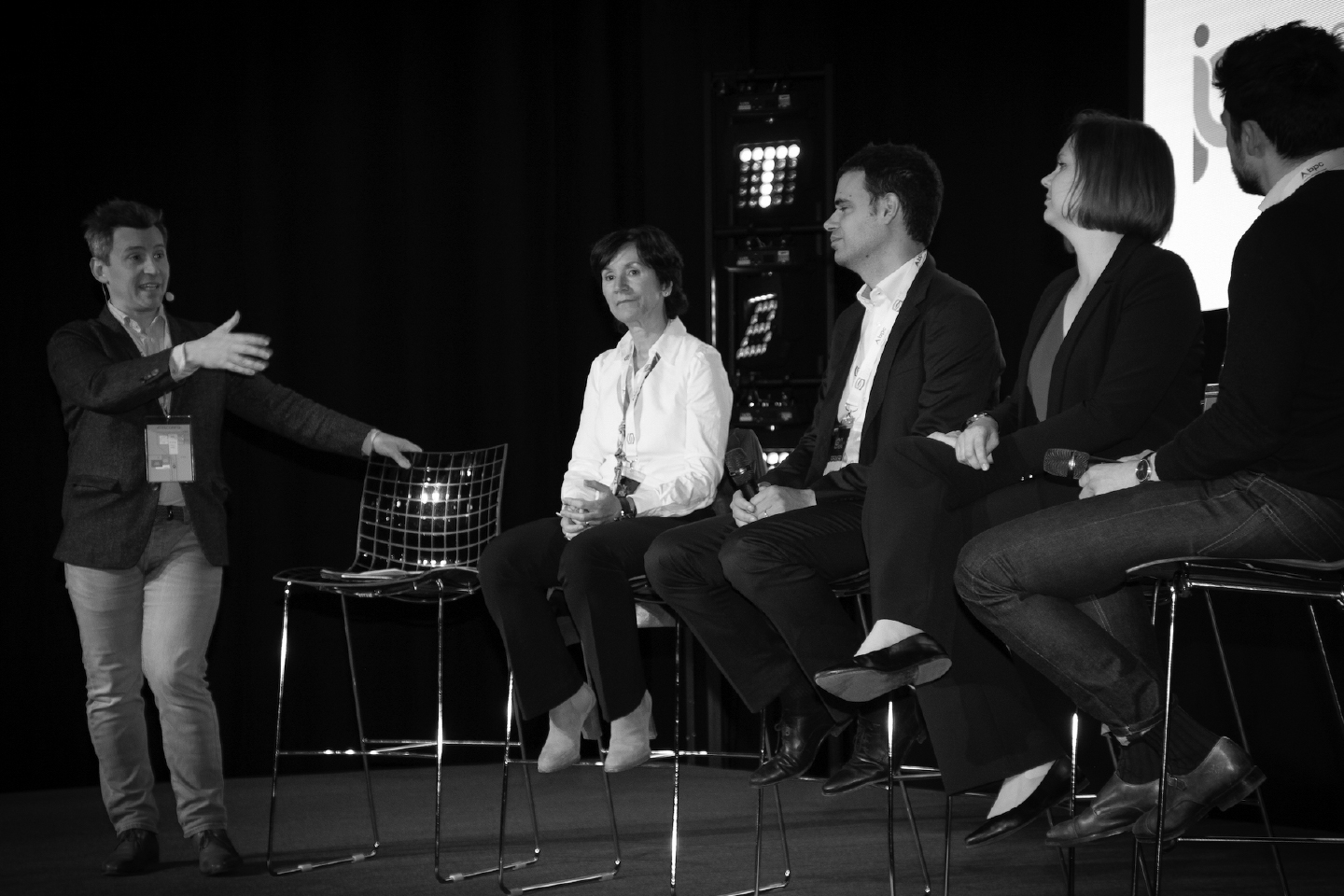
That is precisely why Tristan Kirchner’s intervention at The Banking Scene Conference 2026 Amsterdam stood out. It wasn’t exactly visionary, but it provided a clear and practical path forward. In a day characterised by forward-looking discussions on AI, tokenisation and new financial rails, the conversation remained anchored in something far less glamorous: infrastructure, focus, and the discipline of making strategic choices.
A few weeks later, on April 9th, ClearBank Europe announced it had become the first Dutch credit institution to complete a MiCAR notification to offer digital asset services across Europe.
Consistency over time, not coincidence
ClearBank has been part of The Banking Scene conversations for several years, with different leaders, in different contexts, but with a remarkably consistent message: focus, specialisation, and a deliberate positioning within the value chain.
Charles McManus joined us in Brussels to share ambitions for Europe; Rintse Zijlstra joined us in Amsterdam to explain the process of obtaining a banking licence; and this year, we had Tristan Kirchner, CEO of ClearBank Europe, right before announcing a new accreditation to grow the business.
Three CEOs of ClearBank, three stories, but a clear continuity in direction.
What has changed is not the strategy, but the context in which it is now being executed.
Choosing where not to play
Most banks still operate under the assumption that competitiveness depends on doing more: more services, more products, more control. Even as complexity increases, the instinct is to expand.
ClearBank took a different route. It started with a clean slate and chose to focus on infrastructure. Not the interface. Not the customer relationship. But the layer underneath: clearing, settlement, and embedded banking, enabling others to build customer-facing services on top.
Tristan described this as “invisible infrastructure”: systems that work seamlessly in the background, abstracting complexity from the end user while remaining transparent when needed. His background at Uber, a company built on orchestrating complex ecosystems behind a simple user experience, offers a useful parallel. The value lies not in exposing complexity, but in managing it so effectively that it disappears.
Digital assets, but only where they work
What stood out in Amsterdam was not an explicit push for the technology itself, but a much more pragmatic reflection on where digital assets might actually make sense. With a background in payments, Tristan understands both the complexity and the dependencies of the system, but also where it falls short.
The discussion repeatedly came back to one area in particular: cross-border payments. Not as a slogan, but as a clear entry point, one of the few domains where inefficiencies are still tangible. Cut-off times, limited transparency, multiple intermediaries. These are long-standing issues that remain only partially solved.
In that context, stablecoins were not positioned as a universal answer, but as a potential improvement in specific corridors where existing rails are weakest.
This is where the partnership with Circle becomes particularly relevant. The collaboration provides ClearBank with access to stablecoin infrastructure (and specifically EURC and USDC) and positions it as a bridge between traditional payment systems and digital asset networks.
ClearBank is not trying to build new rails from scratch. It connects to existing ones. Rather than owning the ecosystem, it positions itself as an orchestrator within it, linking traditional payment systems to digital asset networks where it makes sense.
The recent MiCAR milestone reinforces exactly that logic. It does not represent a strategic pivot towards “crypto”, nor does it suggest a belief in a wholesale transition to new rails. It is an extension of an existing role.
From experimentation to responsibility
To understand why, it is worth briefly unpacking what ClearBank actually obtained. By completing its MiCAR notification, it can now operate as a Crypto-Asset Service Provider, or CASP. It means it is authorised to offer services such as custody, exchange, and transfer of digital assets within a regulated European framework.
Many institutions are still discussing digital assets. Becoming a CASP means moving from discussion to responsibility. In that sense, the move positions ClearBank not as a participant in the digital asset market, but as an enabler of it. Combined with its partnership with Circle, it effectively becomes a regulated on- and off-ramp between traditional fiat systems and stablecoin infrastructure.
It also introduces a dimension that is often overlooked in these conversations: risk. As explored earlier in our analysis of fraud risk in digital assets, based on insights from an interview Andrew Vorster had with Sophie Bowler, Chief Risk and Compliance Officer at Zodia Custody, MiCAR is not only about enabling innovation, but also about reducing structural vulnerabilities in the ecosystem.
Fraud, governance and operational resilience; these are not side topics. They are conditions for scale. In that sense, regulation is not just a constraint; it becomes part of the infrastructure itself.
Strategy over hype
ClearBank is taking a different approach to this uncertainty. It is not waiting for everything to be clear before taking action. Instead, it is moving forward step by step, choosing carefully where to play, and sticking to what it does well. It is building on its existing role and extending it where it makes sense.
This is a story about strategy, not digital assets. In a financial system that is becoming more fragmented, with multiple rails and technologies coexisting, banks, especially banks like ClearBank, will not win by trying to do everything. They will win by being essential in a specific part of the system.
For ClearBank, that part is infrastructure.
From narrative to execution
What Charles McManus articulated years ago as a mission to rethink payments infrastructure, Tristan Kirchner now translates into a more explicit European growth strategy. And with MiCAR, that strategy moves from narrative to execution.
The interesting question, then, is not whether this direction is correct. It is whether others are willing, or able, to follow with the same level of consistency.
Because in an industry that often reinvents its story with every new wave of innovation, the real differentiator may not be vision at all.
It may simply be the ability to stay on course long enough for that vision to become reality.
Join us in Brussels on May 28 for our flagship event and Belgium's Biggest Banking Conference, to get involved in the discussions on Tokenised Assets, Stablecoins, CBDC and much more as we continue to explore our theme of "Rethinking Relevance" and the role that banks will play in our customers' lives in the future.
The Banking Scene: Director's Cut
Rik and Andrew go beyond the blog during their discussion as they contemplate the rapid rise of stablecoins and digital assets as a topic of conversation across the industry, as it moves from pilot to production. As always, you can watch / listen to the show below or follow along on your favourite podcast platform here.