
Insights & Opinions
From Experiments to Enterprise Value with Agentic AI
Mon, 11 May 2026

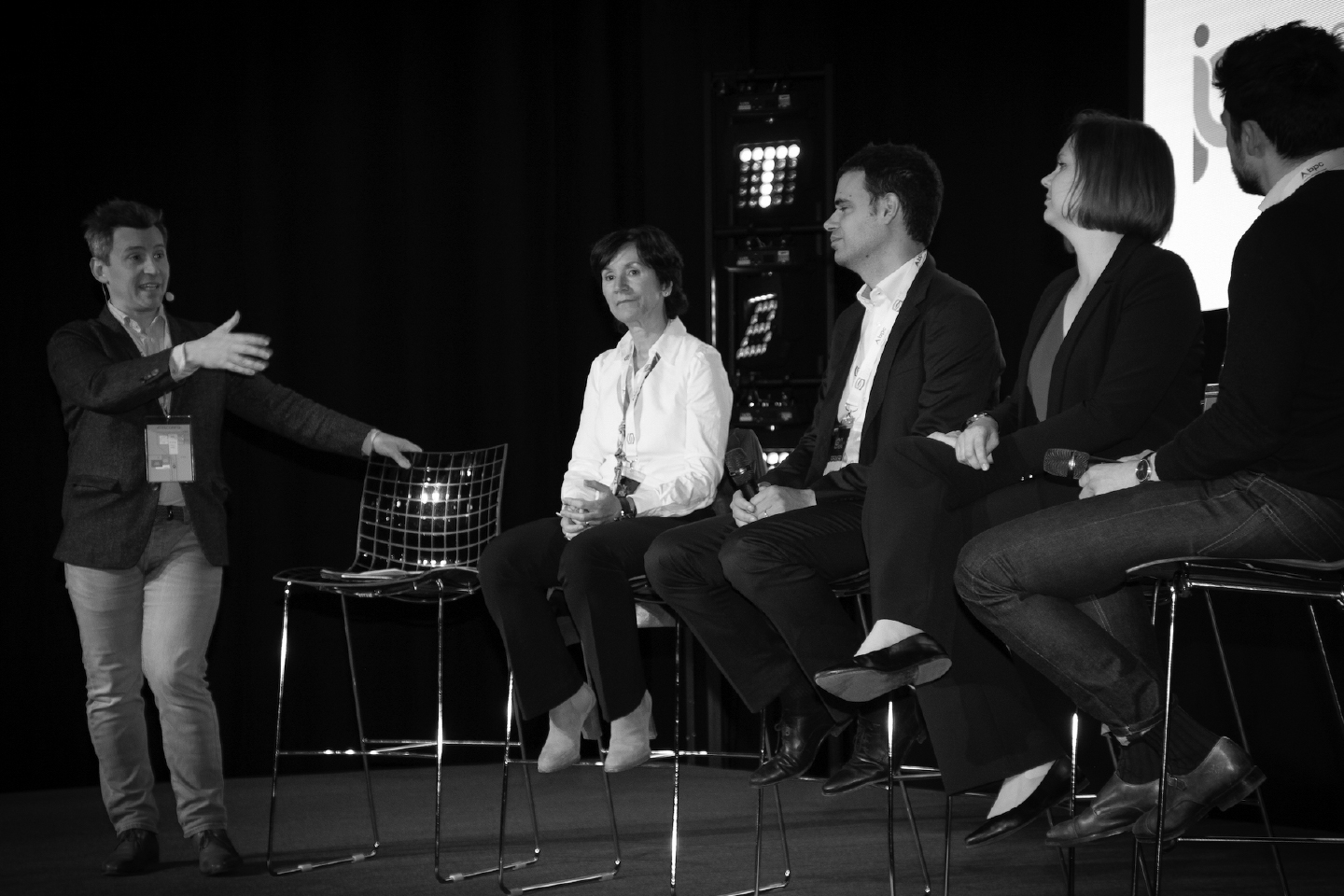
We recently convened a Think Tank session in Brussels in collaboration with Cognizant and Microsoft, to consider how organisations should build, scale, govern and derive competitive advantage from agentic AI.
The discussion, structured across three rounds, surfaced a striking degree of candour and consensus about both the transformative potential and the very real challenges that lie ahead.
What Is Agentic AI, and Do We Trust It?
The opening exchange revealed an instructive tension: executives were assembled to discuss agentic AI, yet no single agreed definition existed around the table. Whilst this might appear a weakness, several participants suggested it matters less than commonly assumed. The shared view that AI systems are capable of perceiving, reasoning and acting autonomously, represents something categorically different from prior automation efforts, was sufficient common ground.
What dominated the first round, however, was trust, or the absence of it. There was broad agreement that the industry is not yet at a point where AI agents can be permitted to independently own and execute business processes end-to-end. The emerging model is one of human-in-the-loop oversight, with agents augmenting rather than replacing human decision-making. Participants noted that internal use cases should come before any customer-facing deployment, allowing organisations to stress-test their governance and confidence before exposing clients to autonomous systems.
A related theme was the distinction between automation and agentification. Several guests observed that automation and AI are increasingly converging, yet cautioned against conflating the two. The agentic enterprise is not simply faster automation: it involves systems with context awareness, memory and the capacity for judgement.
The corollary is that not every problem is best solved through AI; discipline in prioritisation was viewed as essential.
The debate about architecture also emerged early: should organisations pursue a swarm of specialised agents, each expert in a narrow domain, or a single powerful general system? One of the benefits of deploying a swarm of specialised agents is that you can get granular auditability on a per-task or outcome basis. It also means that you can adapt, change, and fine-tune a specific part of the process without replacing the entire model.
No consensus was reached, but the question itself reflected a sophisticated understanding of the design choices ahead.
Governance, Cost and the Uncomfortable Realities of Scaling
While the first round was conceptual, the second was more operational. The clearest message was that AI is not cheap, and the business case for agentic systems is considerably more complex than productivity narratives suggest.
The cost of human oversight, what one participant memorably termed "the cost of babysitting", materially erodes the efficiency gains that agentic AI promises. Unless organisations are prepared to redesign processes wholesale rather than simply layering AI onto existing structures, the productivity case remains elusive.
Governance emerged as the single most urgent priority. Defining guardrails was cited as a top concern by virtually every participant, with a clear view that such guidelines must be set at the executive level rather than delegated to technology teams. Without this, organisations risk a proliferation of shadow IT: employees developing or adopting their own AI tools outside sanctioned frameworks. This was characterised as both a threat and, paradoxically, a potential enabler of innovation, with no easy resolution in sight.
The cost of AI was a particular concern to the smaller banks around the table, as they face tough decisions around budget allocation and a pending sense of being left behind. They felt that the bigger banks have more scope to experiment and fail, while the smaller banks need to be particularly strategic in their choices. Their concerns were further compounded when considering that potential competitive advantages and efficiency gains achieved by AI could widen the gap even further. One of the participants suggested they “just need to jump on the train” and integrate AI into their strategy, as opposed to treating it as a separate project.
The question of scale raised further complications. How do organisations prevent multiple teams from independently solving the same problems? How should costs be allocated: centrally or per business unit? The spectre of vendor lock-in was raised with some urgency: as AI infrastructure becomes embedded, switching costs grow and sovereignty over data and process diminishes. Modularity was identified as a strategic imperative to preserve future flexibility.
As the use of AI increases across the organisation, and if agentic AI performs much of the work currently done by junior staff, what becomes of career paths and talent pipelines? What will constitute an “entry-level” job in the future?
Perhaps the most striking framing came from a participant who reminded us of the fate of Nokia, suggesting that agentic AI represents a similar inflexion point for the technology industry itself. The organisations that navigate this transition will need to move decisively, but without repeating the mistakes of those who mistook the scale of disruption ahead.
Competitive Advantage and the Shape of Things to Come
The final round turned to strategy and competitive differentiation. The dominant theme here was hyperpersonalisation: the prospect of AI systems that know customers well enough to engage them in genuinely individualised ways, managing portfolios, anticipating needs and communicating with warmth at scale. There was near-universal agreement that this is where enterprise value ultimately lies.
Yet this ambition raises profound questions. Consent will need to become far more granular than the binary opt-in models currently in use; customers will need to understand and control precisely what data is shared and how it is used. And as AI agents begin to act on behalf of both banks and their customers simultaneously, the interaction patterns that result will be of considerable complexity and regulatory interest.
Organisational structure itself came under scrutiny. If agents operate across traditional business unit boundaries, do current (siloed) structures remain fit for purpose?
One participant asked pointedly whether private banking, as a distinct service proposition, could survive disruption from AI-powered brokerage platforms. Another questioned whether the industry risks commoditisation, with AI capabilities becoming table stakes rather than differentiators.
Underpinning all of this is data. Participants were emphatic that data management is becoming more critical, not less, in an agentic world. The quality, accessibility and governance of data will determine which organisations can deliver on the hyperpersonalisation promise and which will fall short.
Conclusion
Across three rounds of discussion, several themes emerged with clarity:
- Trust must be earned incrementally, beginning with internal applications and robust human oversight.
- Governance frameworks need executive sponsorship and must be established before scale, not after.
- The productivity case for agentic AI is real but demands genuine process redesign rather than incremental layering.
And the long-term prize: hyperpersonalised, proactive, genuinely intelligent customer engagement, is sufficiently compelling to warrant the difficulty of the journey.
The executives around this table were neither optimists nor sceptics. They were leaders who understood that the window for deliberate, well-governed action is open now, and that organisations that treat this moment as merely incremental do so at their peril.
This interview is included as a reference source for our white paper: "AI and The Agentic Future of Banking", that features exclusive interviews with senior banking executives, technology leaders and AI experts, together with insights gathered through The Banking Scene's research, think tanks, industry events and third-party papers, which you can download on the link below.

The Banking Scene: Director's Cut
Rik and Andrew discuss a few discussion points that were not included in the summary article above and expand on a few more parts of the conversation. As always, you can watch/listen below or follow along on your favourite podcast channel here.